









AI & ML Engineering That Ships to Production
Vervelo builds production-grade AI and machine learning systems — classical ML, deep learning, computer vision, NLP, and full MLOps infrastructure. We design, train, evaluate, and deploy models that work reliably in real workflows at real scale. No experiments. No prototypes delivered as final outputs.
Why Organizations Choose Vervelo for AI & ML Engineering
Most AI projects fail in the gap between a working model and a working system. Vervelo closes that gap — we don't just train models, we build the full engineering stack around them that makes AI reliable, observable, and maintainable in production.


80+
Predictive AI Systems Delivered
End-to-end ML systems shipped across healthcare, health-tech, and enterprise
32%
Average Model Accuracy Uplift
Median improvement over baseline model performance achieved through structured feature engineering
4x
Faster Model-to-Production
Versus assembling an in-house AI team from scratch — Vervelo provides immediately deployable expertise
60%
Reduction in Inference Cost
Average inference cost reduction achieved through model compression, quantization
AI & ML Engineering Disciplines — One Integrated Team
What We Build
Our AI & ML Engineering Service Lines
Vervelo covers the complete ML engineering stack — from problem framing and data preparation through model development, evaluation, and production deployment. Each discipline is a dedicated practice staffed with specialist engineers, not a generalist team dabbling across domains.
AI & ML Services
Classical ML & Predictive Analytics
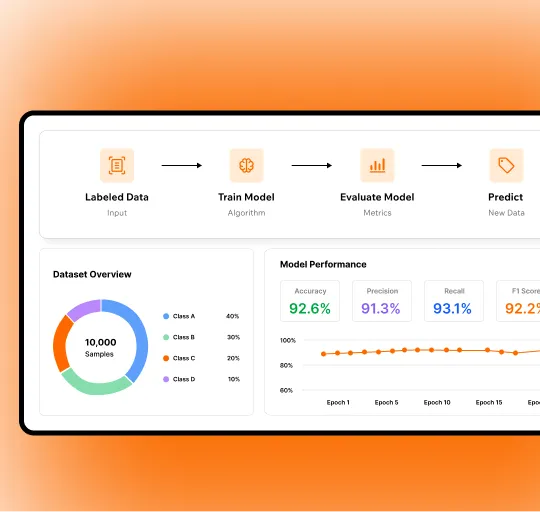
Vervelo designs and trains supervised learning models for classification and regression tasks where labeled training data is available and the prediction target is well-defined. We handle the full pipeline: feature selection and engineering, algorithm selection (gradient boosting, random forests, SVMs, logistic regression), hyperparameter tuning via cross-validation, and calibration of prediction confidence. For healthcare use cases, this includes risk stratification models, readmission prediction, no-show forecasting, and diagnostic classification — each delivered with explainability outputs (SHAP values, feature importance rankings) that support clinical decision-making workflows.
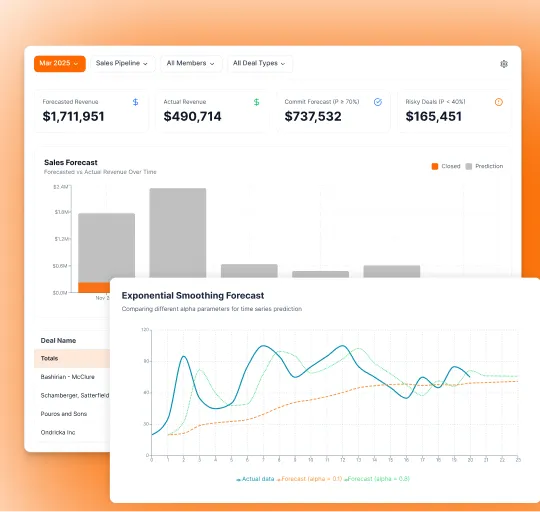
Forecasting models require careful handling of temporal structure, seasonality, trend decomposition, and lagged feature construction that standard ML pipelines don't address automatically. Vervelo builds time-series forecasting systems using statistical methods (ARIMA, Prophet), machine learning approaches (XGBoost with lag features, LightGBM), and neural sequence models (LSTM, Temporal Fusion Transformer) depending on the data characteristics and forecast horizon. Applications include demand forecasting, patient census prediction, staffing optimization, and operational capacity planning — with prediction intervals and uncertainty quantification as standard outputs.
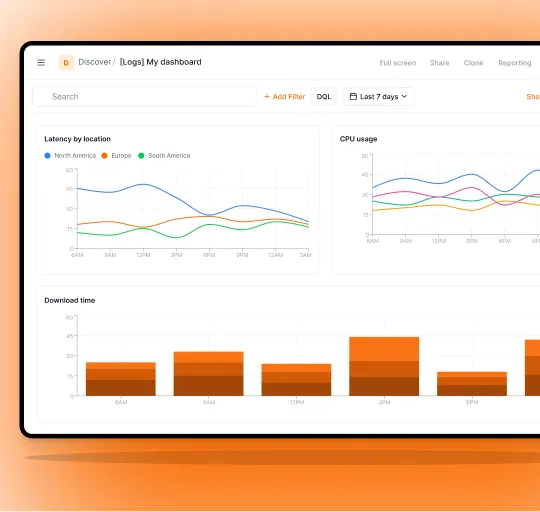
When labeled data is scarce or the task is to find patterns rather than predict a known target, unsupervised and semi-supervised approaches are required. Vervelo builds anomaly detection pipelines using isolation forests, autoencoders, and statistical process control methods — applied to fraud detection, equipment failure prediction, clinical outlier identification, and data quality monitoring. We also design clustering and segmentation systems (K-means, DBSCAN, hierarchical clustering) for patient cohort identification, customer segmentation, and cohort discovery in clinical research. All outputs include interpretability layers that make model behavior transparent to non-technical stakeholders.
AI & ML Services
Deep Learning & Neural Network Development
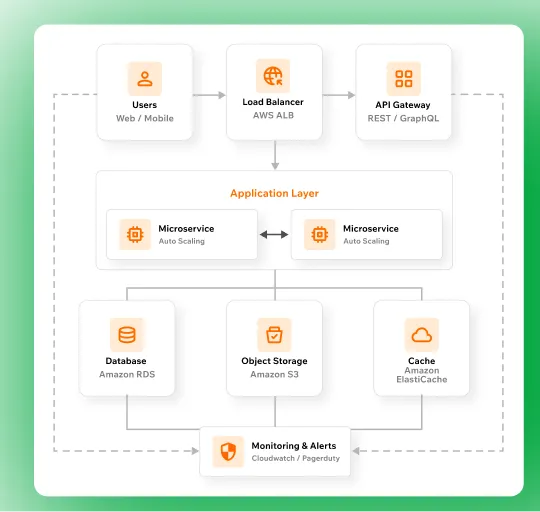
Off-the-shelf architectures work for standard tasks. Novel or domain-specific problems often require custom network designs — modified attention mechanisms, multi-task learning heads, hybrid CNN-transformer architectures, or specialized loss functions that encode domain constraints. Vervelo's deep learning engineers design, implement, and validate custom architectures in PyTorch and TensorFlow, with systematic ablation studies to justify each architectural choice. We document architecture decisions, training configurations, and performance trade-offs so your team can maintain and extend the model after delivery.
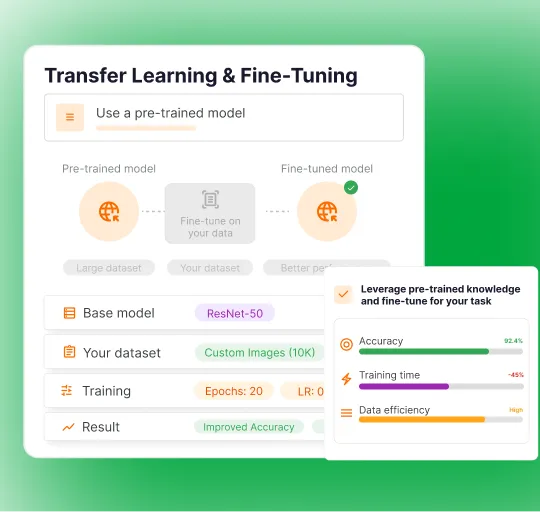
Training large models from scratch is expensive and data-hungry. Transfer learning applies a model pre-trained on large datasets to your specific task, requiring far less labeled data and compute. Vervelo implements transfer learning strategies across vision (ResNet, EfficientNet, ViT), language (BERT, RoBERTa, domain-specific clinical BERT variants), and multimodal models — selecting the right pre-trained backbone, designing the fine-tuning protocol, and validating that the adapted model generalizes to your distribution without overfitting to fine-tuning data. We apply parameter-efficient fine-tuning (LoRA, adapters) when compute budgets are constrained.
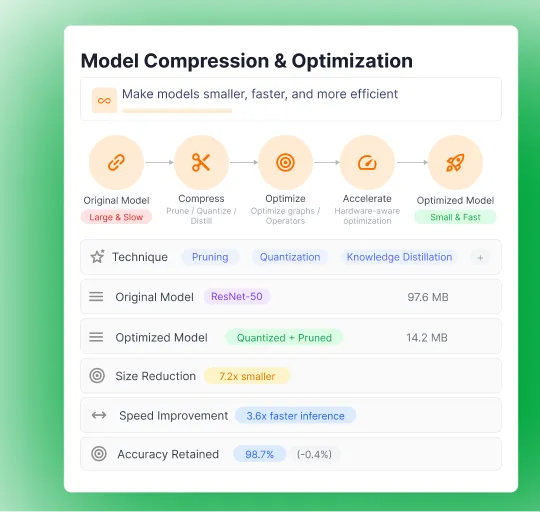
A model that performs well in training may be too slow or too large to deploy cost-effectively. Vervelo applies a systematic compression toolkit: structured and unstructured pruning to remove low-importance weights, knowledge distillation to train a smaller student model from a larger teacher, quantization (INT8, INT4) to reduce memory footprint and inference latency, and ONNX export for hardware-optimized deployment. Compression pipelines include automated performance regression testing to verify that accuracy stays within acceptable bounds after each compression step — so you always know the accuracy-efficiency trade-off before making a deployment decision.
AI & ML Services
Computer Vision & Natural Language Processing
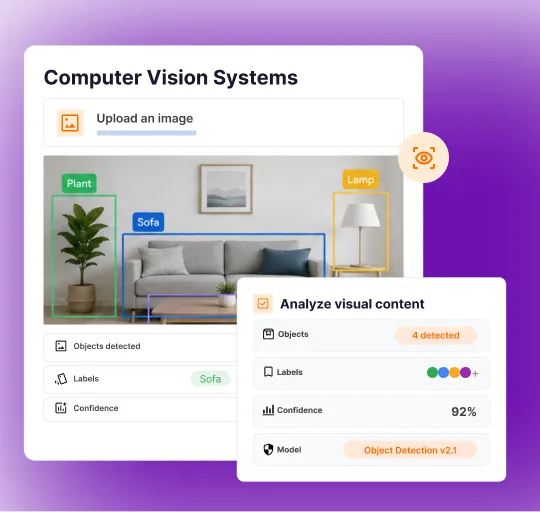
Vervelo builds computer vision systems for image classification, object detection, segmentation, OCR, and document understanding. In healthcare, this includes medical image analysis (radiology, pathology, dermatology), clinical document digitization, form extraction from scanned records, and visual quality control in laboratory and pharmacy workflows. We handle the full vision pipeline: data collection and annotation (bounding boxes, polygons, segmentation masks), model training and validation against clinical ground truth, and deployment as an API service or embedded model within your existing workflow tools. All clinical vision models are validated on held-out test sets with performance stratified by subgroup to identify and address performance disparities.
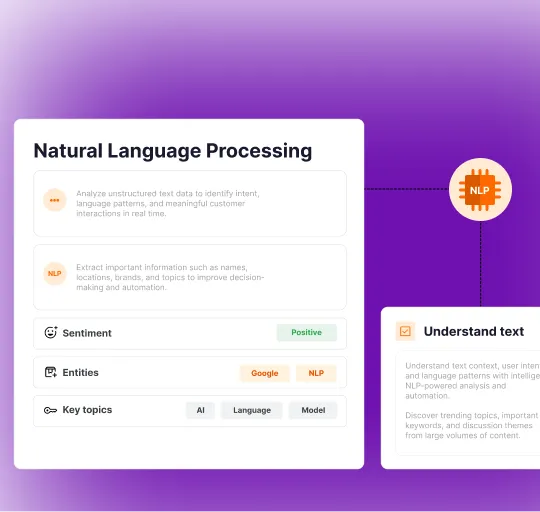
Vervelo builds NLP pipelines for text classification, named entity recognition (NER), information extraction, document summarization, and clinical coding. For healthcare, we develop models that extract structured data from unstructured clinical notes — diagnoses, medications, procedures, lab values, and clinical observations — enabling downstream analytics, audit, and automation. NLP systems are built on transformer-based architectures (BERT variants, domain-specific clinical models like BioBERT, ClinicalBERT) and evaluated with entity-level precision, recall, and F1 metrics across document types, note authors, and clinical specialties.
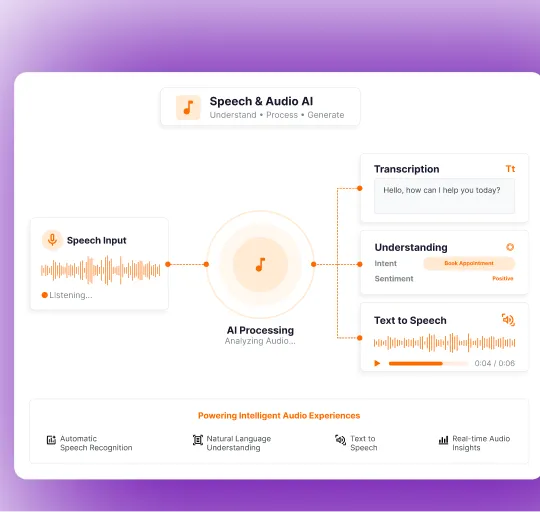
Voice-driven workflows are increasingly common in clinical settings. Vervelo builds speech recognition and audio processing systems for ambient clinical documentation, real-time transcription of patient-provider conversations, speaker diarization (who said what), and voice command interfaces for clinical applications. We fine-tune Whisper and other ASR models on medical vocabulary to handle clinical terminology, drug names, and procedural language that general-purpose transcription models routinely fail on. Transcription outputs feed into NLP pipelines that extract structured clinical data from the resulting text.
More Capabilities
Supporting Technologies Built Into Every Vervelo AI Engagement
Data Pipeline Engineering
End-to-end data pipelines that collect, validate, transform, and version the training and inference data your models depend on. Includes schema validation, data quality gates, and automated re-ingestion triggers when upstream sources change.
Feature Store Design & Implementation
Centralized feature stores (Feast, Tecton, Hopsworks) that make engineered features reusable across models, consistent between training and serving, and versioned for reproducibility. Critical infrastructure for organizations running multiple models on shared data.
Experiment Tracking & Reproducibility
MLflow, Weights & Biases, or Neptune integration to log every training run — hyperparameters, metrics, artifacts, and environment specifications. Full reproducibility of any historical training run from code, data, and configuration.
Model Explainability & Interpretability
SHAP, LIME, and integrated gradients for post-hoc model explanation. Counterfactual explanations, feature attribution reports, and decision boundary visualization for models used in clinical or regulatory contexts where black-box outputs are not acceptable.
Federated Learning
Model training across distributed data sources without centralizing sensitive data — critical for multi-site clinical collaborations where data cannot leave institutional boundaries. Includes differential privacy mechanisms and secure aggregation protocols.
Reinforcement Learning & Optimization
RL-based systems for sequential decision problems: treatment protocol optimization, resource allocation, adaptive clinical trial design, and dynamic pricing. Includes simulation environment design and safe exploration strategies for high-stakes settings.
AutoML & Neural Architecture Search
Automated model selection, hyperparameter optimization (Optuna, Ray Tune), and neural architecture search for use cases where manual experimentation is cost-prohibitive. Produces well-validated model candidates faster without sacrificing rigor.
On-Premise & Air-Gapped AI Deployment
Self-hosted model deployment for organizations with data residency requirements or air-gapped environments. Includes containerized inference servers, GPU cluster configuration, and model registry setup with no dependency on external cloud services.
AI Governance & Audit Readiness
Model cards, data sheets, bias audit reports, and lineage documentation that satisfy internal governance requirements and regulatory audit inquiries. Structured evidence packages for FDA SaMD submissions, CMS quality reporting, and SOC 2 AI controls.
Why Build Your AI Systems with Vervelo
Most organizations can access AI models. Few have the full-stack ML engineering capability to turn them into systems that perform reliably in production. That gap is where Vervelo operates.

Full-Stack ML Engineering
We don't hand off at model training. Vervelo covers the complete stack — data pipelines, model development, evaluation, MLOps infrastructure, API integration, and ongoing monitoring. One team, end-to-end accountability.

Healthcare AI Expertise
Our team has built ML systems for clinical risk stratification, NLP for clinical notes, medical image analysis, prior authorization automation, and FHIR-native AI APIs. We understand PHI handling, HIPAA, and clinical safety requirements that general ML shops overlook.

Rigorous Evaluation Culture
Every model we deliver is evaluated against a pre-defined benchmark suite — not eyeballed on a validation curve. We define success metrics before training begins and don't ship models that don't meet them.

Production-First by Default
Monitoring, observability, drift detection, and retraining pipelines are not optional extras. Every AI system Vervelo builds is designed for the operational reality of production from the first design session.
Our Process
How Vervelo Delivers AI & ML Engineering Projects
A structured, phase-gated delivery process that moves from business problem to production AI system — with explicit go/no-go decisions at each stage before resources are committed to the next.
Problem Framing & Feasibility
We start by interrogating the business problem — what decision are we trying to improve, what does measurable success look like, what data is available, and is ML actually the right solution? We produce a problem statement, success criteria, data requirements assessment, and a feasibility recommendation before any modeling begins.
Data Audit & Pipeline Design
We audit your existing data assets — volume, quality, labeling, historical coverage — and design the data preparation pipeline. This includes feature engineering strategy, train/validation/test split design, and handling of class imbalance, missing data, and distribution shift between training and production data.
Model Development & Experimentation
We run a structured experimentation phase: baseline model establishment, systematic architecture and algorithm comparison, feature importance analysis, and iterative improvement cycles. All experiments are tracked with full reproducibility. We produce a model selection report with the evidence supporting the chosen approach.
Evaluation, Bias Audit & Validation
The model is evaluated against the pre-defined success metrics on the held-out test set. Evaluation includes subgroup performance analysis, bias audit across protected attributes, adversarial input testing, and calibration assessment. Results are documented in a model evaluation report before integration begins.
Integration, Load Testing & Staging
The model is integrated into your application or workflow, wrapped in a production API, and subjected to end-to-end integration testing and load testing at expected production request volumes. Performance under load is verified before any production traffic is routed to the new model.
Production Deployment & Monitoring
We deploy with full observability infrastructure — prediction logging, performance dashboards, drift detection, and alerting. Post-launch, Vervelo provides model monitoring, retraining pipeline management, and a development roadmap for model version improvements as more production data becomes available.
Ready to maximize your VBC reimbursement?
See how Vervelo can be live in your practice in under 30 days.
Over 120+ custom healthcare solutions
Built and developed to deliver excellent patient care, drive clinical innovation and meet regulatory compliance standards
Our expertise in healthcare
Healthcare software development success case studies

4x
faster RPM launch and deployment across 3 clinics
CarePlus TeleHealth
Built a custom remote-patient-monitoring (RPM) platform for a U.S. home-care provider, allowing them to deploy monitoring to 3 clinics in under 8 weeks four times faster than their previous in-house attempts.
View case study
60%
staff-time savings on admin tasks
GrandView Hospital
A major hospital system working with fragmented legacy systems (billing, lab, EMR, patient portal) engaged Vervelo to build an integrated EHR + billing + patient portal + telehealth platform.
View case study
5x
growth in patient engagement
HealthBridge
Health-tech startup offering subscription-based telehealth and chronic-care services partnered with Vervelo to build a user-friendly patient portal and mobile app (tele-consultation, RPM data sync, follow-ups)
View case study
Compliance-First Software that Protects your and your patients Data
We build healthcare software with compliance and security built in from the start. Our team understands key standards like HIPAA, FDA guidance, ISO 27701, GDPR, SOC 2 and modern interoperability (HL7 FHIR). We design solutions that help protect patient data, make audits easier, and support trust across your organization.



What Vervelo Brings to Healthcare
We've helped organisations from small clinics to large health systems improve patient care with interoperability data connection by over 75 percent, cut user frustration and admin workload by over 60 percent, and accelerate system performance and reliability for higher care quality.


Engineering + Healthcare Domain Expertise
We combine strong healthcare domain knowledge with expert software engineering to build reliable, high-quality healthcare systems. You get fast delivery, full ownership of your solution, and software that works the way your providers and staff actually need it to work.
Healthcare-First Development
We follow proven healthcare development practices that create secure, scalable systems with measurable benefits. Our approach reduces complexity, supports clinical workflows, and helps you make confident technology decisions.

EHR Integration and Unified Data Flow
We connect with major EHR systems and healthcare data sources using modern standards like FHIR and HL7. This ensures clinical data, telehealth records, and patient devices work together in one trusted system.
Built with Compliance and Data Security
Patient privacy and regulatory compliance are essential in healthcare software. We include HIPAA-ready security, privacy controls, audit logs, and safe data handling from the start—without slowing you down.

Vervelo is a digital-health software partner blending deep clinical insight with world-class engineering to build tailored, secure, interoperable healthcare platforms. With a team of HIPAA- and FHIR- trained professionals and a track record of delivering 120 + custom healthcare solutions, we help healthcare providers, startups, and health-tech companies accelerate innovation, improve patient care, and simplify operations
-

Vervelo designs your EMR/EHR around your unique practice needs and specialty that reflect how your team actually operates.
-

Choose the tools and modules that matter most to you. Nothing extra to slow things down.
-

We don’t charge subscription fees or take a cut of your patient billing like traditional EMRs.
Frequently Asked Questions
Have a question that needs a human to answer? No problem.
Speak to our sales team now → What does Vervelo's AI & ML Engineering service actually cover?
The complete ML engineering stack — classical ML, deep learning, computer vision, NLP, and full MLOps infrastructure — designing, training, evaluating, and deploying models for real production use, not just experiments or prototypes.
What falls under Classical ML & Predictive Analytics?
- 1. Supervised Learning & Classification: Risk stratification, readmission prediction, no-show forecasting, and diagnostic classification with SHAP-based explainability.
- 2. Time-Series Forecasting: ARIMA, Prophet, XGBoost, LightGBM, LSTM, and Temporal Fusion Transformer for demand forecasting, patient census, and staffing.
- 3. Anomaly Detection & Clustering: Isolation forests, autoencoders, K-means, and DBSCAN for fraud detection, equipment failure prediction, and patient cohort identification.
What falls under Deep Learning & Neural Network Development?
- 1. Custom Architecture Design: Built in PyTorch/TensorFlow with comprehensive ablation studies.
- 2. Transfer Learning & Fine-Tuning: ResNet, EfficientNet, ViT, BERT, RoBERTa, clinical BERT variants, plus LoRA/adapters for constrained budgets.
- 3. Model Compression & Optimization: Pruning, knowledge distillation, quantization to INT8/INT4, and ONNX export.
What falls under Computer Vision & NLP?
- 1. Computer Vision Systems: Medical image analysis, document digitization, form extraction, and visual QC.
- 2. Natural Language Processing: Clinical note extraction using BioBERT/ClinicalBERT variants.
- 3. Speech & Audio AI: Ambient clinical documentation, transcription, and speaker diarization using fine-tuned Whisper models.
What falls under MLOps & AI Integration Engineering?
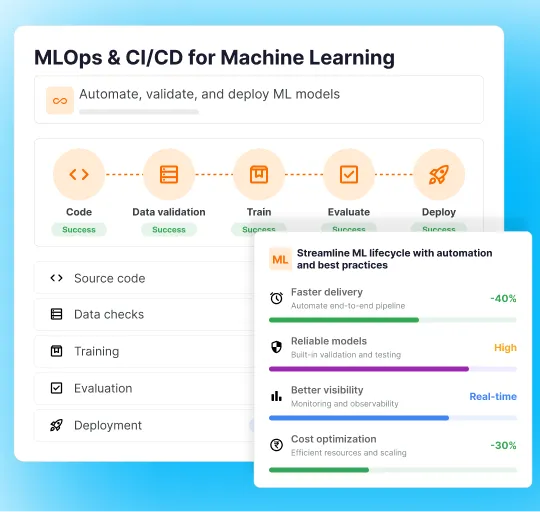
- 1. MLOps / CI-CD Infrastructure: Experiment tracking, data versioning, automated retraining, and canary deployments on SageMaker/Vertex AI/Azure ML/Kubernetes.
- 2. Model Monitoring & Drift Detection: Continuous oversight using Evidently AI, Arize, and WhyLogs.
- 3. AI Integration & API Development: RESTful and event-driven endpoints, including HL7 FHIR-native AI endpoints for EHR integration.
What other supporting technologies are included in every engagement?
- 1. Data Pipeline Engineering & Feature Store Design: Managed via Feast, Tecton, and Hopsworks.
- 2. Experiment Tracking & Model Explainability: MLflow, W&B, Neptune, SHAP, LIME, and integrated gradients.
- 3. Advanced AI Deployment & Governance: Federated learning for multi-site clinical data, reinforcement learning, AutoML/NAS, on-prem/air-gapped deployment, and AI governance/audit readiness (model cards, bias reports, FDA SaMD submission support).