









AI Agents & Agentic Systems That Work Reliably in Production Healthcare Environments
Vervelo builds production-grade AI agents and LLM applications with the orchestration logic, memory systems, and MLOps infrastructure required for autonomous AI to perform in healthcare workflows.

Why Teams Choose Vervelo for AI Software Development
Most AI agents break in production. They hallucinate tool calls, lose track of multi-step state, fail silently under real user inputs, and have no observability when something goes wrong. Vervelo builds AI software with engineering discipline — structured agent architecture, rigorous failure-mode testing, full tool integration, and production monitoring so your autonomous AI performs predictably and is maintainable over time.

10x
Faster Agent Development
Reusable agent primitives, tool libraries, and evaluation harnesses accelerate delivery compared to building from scratch
99.9%
Production Uptime Target
Auto-scaling inference infrastructure with failover, retry logic, and circuit breakers for resilient AI services
50%
Lower Inference Cost
Achieved through quantized model serving, semantic caching, batching, and intelligent routing across model tiers
8 wks
Avg Time to Production
From use case scoping to a fully monitored, production-deployed AI agent system for most healthcare workflows
AI Software Development Service Areas
4 AI Engineering Disciplines — One Integrated Practice
From single-purpose AI agents and multi-agent orchestration through production deployment and full LLM application development — every layer of the AI software stack, built as a professional engineering discipline, not a research experiment.
Service 01
AI Agent Architecture & Development
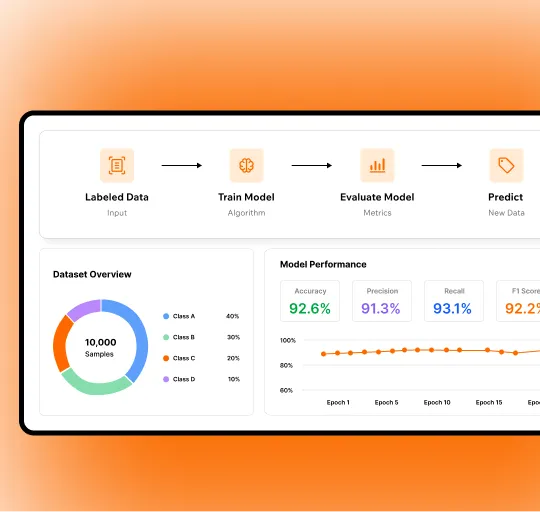
Agent design with defined tool sets, planning strategies (ReAct, plan-and-execute), memory architecture (working, episodic, semantic, long-term), and healthcare-specific safety constraints and audit logging built into every agent.
Service 02
Multi-Agent Orchestration
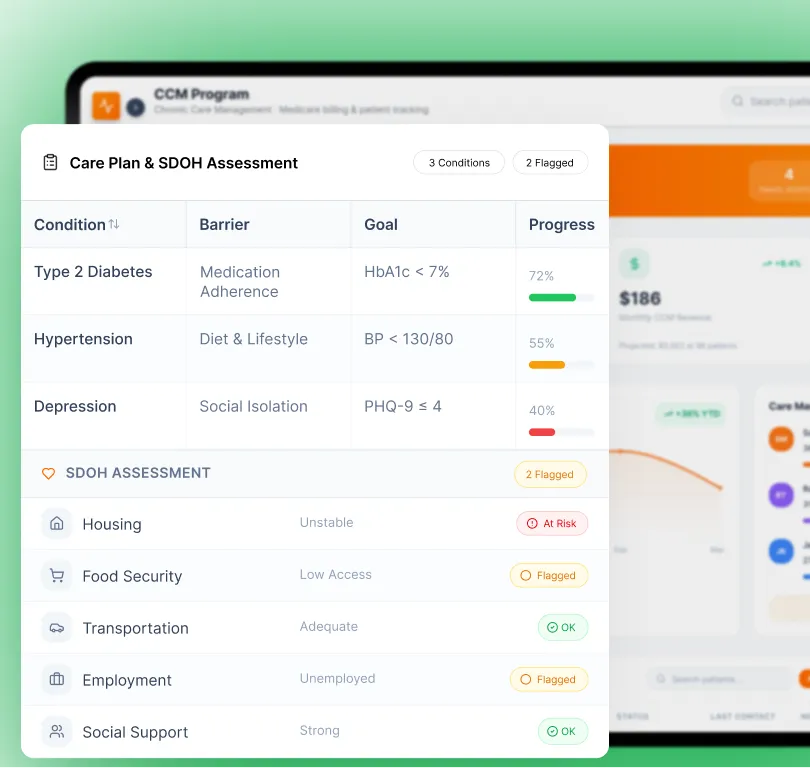
Supervisor and specialist agent architectures, inter-agent communication protocols, shared state management, human-in-the-loop checkpoints, and framework selection (LangGraph, CrewAI, AutoGen, or custom orchestration).
Service 03
Production Deployment & MLOps
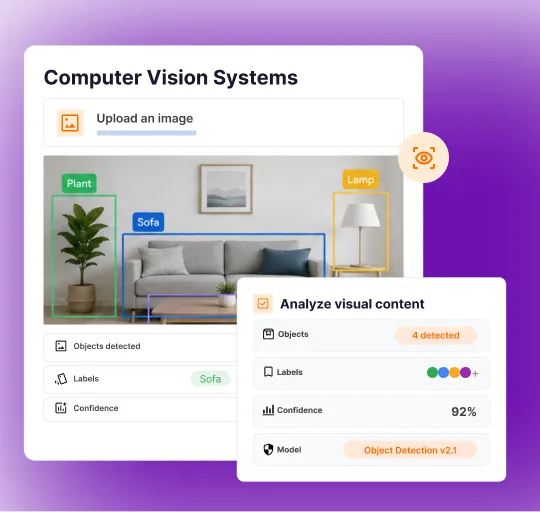
Containerized model serving with auto-scaling, AI-specific CI/CD with evaluation gates, distributed tracing across the full agent loop, cost monitoring per workflow, and automated alerting for quality degradation and safety violations.
Service 04
LLM Application Development
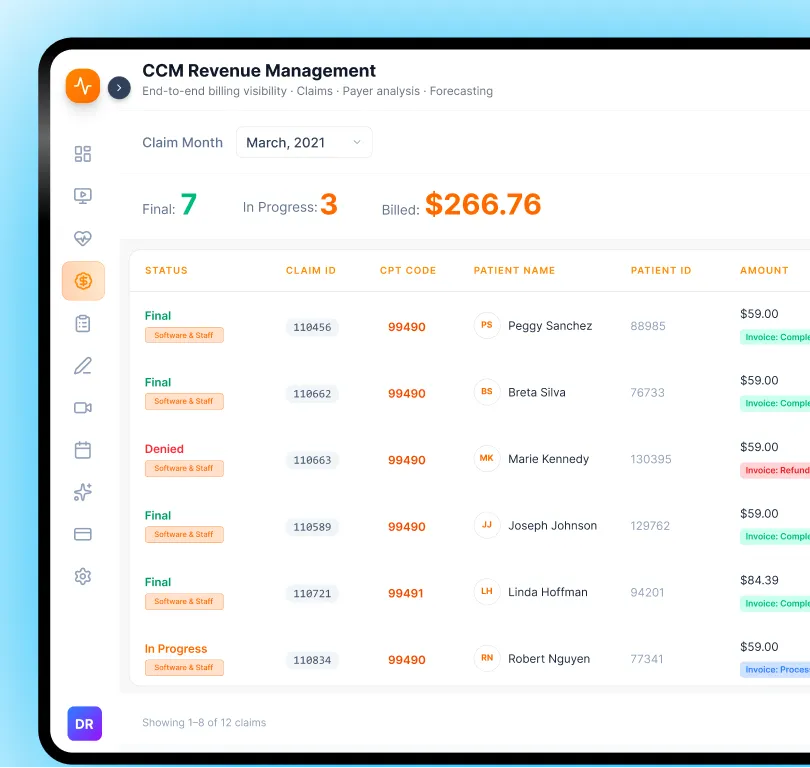
End-to-end LLM application architecture, RAG-powered knowledge applications with full retrieval pipelines, structured output enforcement, and HL7/FHIR integration for clinical system compatibility.
Supporting Capabilities
Technologies & Practices Built Into Every AI Software Engagement
Tool Use & Function Calling
Production-grade tool integration — database queries, REST API calls, document retrieval, code execution, calendar and scheduling tools, and EHR system APIs — with retry logic, timeout handling, and structured output validation for every tool.
AI Observability & Tracing
Full distributed tracing across every LLM call, tool invocation, and agent decision — with LangSmith, Helicone, or custom backends providing latency profiling, cost attribution, and quality scoring across the entire agent execution graph.
Guardrails & Safety Filtering
Input and output safety layers using NeMo Guardrails, Llama Guard, or custom classifiers — filtering PII exposure, blocking unsafe clinical content, enforcing output format compliance, and logging every safety intervention for audit.
Vector Store & Semantic Search
Selection, setup, and optimization of vector databases (Pinecone, Weaviate, Qdrant, pgvector) for your knowledge retrieval requirements — including index strategy, embedding pipeline management, and hybrid search tuning for clinical document retrieval.
GPU Inference Optimization
Quantized model deployment (GGUF, GPTQ, AWQ), continuous batching, speculative decoding, and vLLM/TGI configuration for self-hosted open-source models — reducing per-token inference cost by 40–60% without meaningful quality degradation.
HIPAA-Compliant AI Architecture
PHI minimization in agent context and tool calls, BAA-compatible infrastructure design, audit logging of every model input/output containing patient data, access control on retrieval systems, and data residency configuration for cloud AI deployments.

Why Build Your AI Software with Vervelo
Most teams can build an AI demo. Vervelo builds AI systems that perform in production — with the architecture, testing, infrastructure, and observability to operate autonomous AI reliably at scale in regulated healthcare environments.

Full-Stack AI Engineering
We build the complete AI stack — agent architecture, retrieval systems, orchestration logic, inference infrastructure, and production monitoring. Not just the model call, but the entire system around it.

Healthcare AI Specialization
Clinical domain knowledge, HIPAA-compliant architecture patterns, FHIR/HL7 integration experience, and a deep understanding of the risk profile that makes healthcare AI different from any other vertical.

Production-First Mindset
Every agent and application we build is designed for production from the start — with evaluation harnesses, CI/CD gates, observability, and failover logic built in before the first demo, not after the first production incident.

Compliance & Security Built-In
HIPAA-ready data flows, PHI minimization in AI context, audit logging of every model decision, access-controlled retrieval systems, and BAA-compatible infrastructure — standard on every healthcare AI engagement.
Our Process
How Vervelo Delivers AI Software Engagements
A structured, phase-driven process that moves from use case definition to production-deployed, fully monitored AI systems — without the undocumented decisions and untested architecture that cause most AI deployments to fail in production.
Use Case Definition & Architecture Design
We define the agent's scope, success criteria, failure modes, and compliance requirements. We design the high-level architecture — agent boundaries, tool set, memory model, orchestration pattern, and integration points — and produce a documented architecture brief before any code is written.
Tool Integration & Agent Development
We build the tool integrations first — connecting to APIs, databases, EHR systems, and retrieval pipelines — and validate each tool independently before integrating it into the agent. Agent development proceeds iteratively against a defined task test suite.
Memory & Orchestration Implementation
We implement the memory architecture, orchestration logic, and inter-agent communication protocols. For multi-agent systems, we build the supervisor agent and validate role boundaries through adversarial testing before connecting specialist agents.
Evaluation & Safety Testing
We run the full evaluation suite — task completion tests, adversarial inputs, tool failure scenarios, multi-step state management tests, and clinical safety checks. Evaluation results must meet defined thresholds before the system advances to deployment.
Production Infrastructure Setup
We configure the inference infrastructure, CI/CD pipeline with evaluation gates, distributed tracing, cost monitoring dashboards, and alerting. For self-hosted models, this includes GPU cluster setup, quantized model deployment, and LLM gateway configuration.
Deployment, Monitoring & Iteration
We deploy with canary traffic splitting and monitor performance, cost, and safety metrics in production. Post-launch iteration is driven by observed behavior — task completion rates, user escalations, cost anomalies — with a structured process for agent updates that maintains the full evaluation chain.
Over 120+ custom healthcare solutions Built and developed to deliver excellent patient care, drive clinical innovation and meet regulatory compliance standards
Ready to build AI agents that work in production?
Talk to Vervelo's AI engineering team about your agentic use case
Our expertise in healthcare
Healthcare software development success case studies

4x
faster RPM launch and deployment across 3 clinics
CarePlus TeleHealth
Built a custom remote-patient-monitoring (RPM) platform for a U.S. home-care provider, allowing them to deploy monitoring to 3 clinics in under 8 weeks — four times faster than their previous in-house attempts.
View case study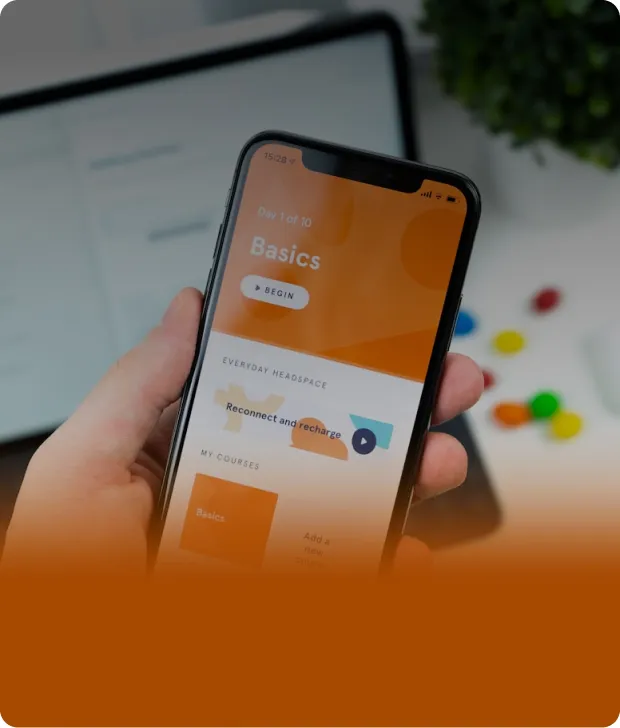
60%
staff-time savings on admin tasks
GrandView Hospital
A major hospital system with fragmented legacy systems engaged Vervelo to build an integrated EHR + billing + patient portal + telehealth platform.
View case study
5x
growth in patient engagement
HealthBridge
Health-tech startup offering subscription-based telehealth and chronic-care services partnered with Vervelo to build a user-friendly patient portal and mobile app.
View case study
Compliance-First Software that Protects your and your patients Data
Every AI system Vervelo builds for healthcare is designed with compliance from the start. Our engineers understand HIPAA, FDA guidance on AI/ML in clinical settings, ISO 27701, GDPR, SOC 2, and HL7 FHIR interoperability. Agent architectures include PHI minimization, data residency controls, audit logging of all model inputs and outputs, and access-controlled retrieval systems as standard requirements.




What Vervelo Brings to Healthcare AI
We've helped organisations from early-stage health-tech startups to large hospital systems deploy AI agents in production — automating prior auth workflows, clinical documentation, patient outreach, revenue cycle tasks, and care management processes with measurable outcomes and full compliance infrastructure.

Engineering + Healthcare Domain Expertise
We combine deep healthcare domain knowledge with expert AI engineering to build agents that understand clinical workflows — not just general-purpose automation. You get reliable AI that integrates with your existing systems and operates within clinical safety boundaries.

Production-Grade AI Systems
We build AI for production, not proof-of-concept. Every system ships with evaluation harnesses, CI/CD pipelines with quality gates, distributed tracing, and cost monitoring — the infrastructure that separates AI that keeps working from AI that degrades silently after launch.

Full-Stack AI Ownership
From model selection and agent architecture to inference infrastructure and production observability — we own the full stack. You receive complete source code, documentation, runbooks, and a handover process that gives your team full operational ownership after delivery.
HIPAA-Compliant AI by Default
Compliance is designed into every AI system we build — not reviewed at the end. PHI handling protocols, audit logging, access controls, data residency, and BAA-compatible infrastructure are standard requirements on every healthcare AI engagement, regardless of project size.

Vervelo is a digital-health software partner blending deep clinical insight with world-class engineering to build tailored, secure, interoperable healthcare platforms. With a team of HIPAA- and FHIR-trained professionals and a track record of delivering 120+ custom healthcare solutions, we help healthcare providers, startups, and health-tech companies accelerate innovation, improve patient care, and simplify operations.
-

Vervelo designs AI agents and applications around your specific clinical workflows and data systems — not generic templates that require your team to adapt their processes to the AI.
-

Choose the AI services and deployment model that match your maturity level — from a single-agent MVP to a full multi-agent platform with production MLOps infrastructure.
-

Optimized inference infrastructure and intelligent model routing reduce AI operating costs by 40–60% compared to naive API-call architectures — lowering your per-workflow AI cost as you scale.

Frequently Asked
Questions
Have a question that needs a human to answer? No problem.
Speak to our team now →
What is an AI agent and when should I build one instead of a simpler
LLM integration?
An AI agent is appropriate when a task requires multiple steps, decision-making based on intermediate results, or the ability to use tools (APIs, databases, search) to complete the work. A simple LLM integration — a single prompt that produces a single output — is often enough for generation and summarization tasks. When a workflow requires the AI to plan, act, observe results, and adapt (like processing a prior authorization, automating clinical documentation end-to-end, or running a multi-step patient outreach sequence), an agent architecture is needed. The distinction is whether you need the AI to do something, not just say something.
What frameworks do you use to build AI agents, and why?
Framework selection depends on the workflow requirements. We use LangGraph for graph-based workflows with explicit state machines where control flow needs to be auditable. We use CrewAI or AutoGen for multi-agent systems where role-based collaboration maps well to the task structure. For simpler sequential pipelines, LangChain LCEL or direct API composition is often preferable. For high-reliability clinical workflows where framework abstractions introduce unpredictable behavior, we build custom orchestration. We are not framework advocates — we select based on what gives the most control and observability for your specific use case.
How do you ensure AI agents are reliable enough for production
healthcare workflows?
Reliability in production agents comes from: explicit failure-mode testing (what happens when a tool call fails, times out, or returns unexpected data), structured evaluation harnesses that test agent behavior against a ground truth task dataset before every deployment, human-in-the-loop checkpoints for high-stakes decisions, safety guardrails that prevent autonomous actions outside defined boundaries, full observability so issues are detected before users are affected, and CI/CD gates that block deployment of any agent version that degrades on the evaluation suite. We treat agent reliability as an engineering discipline with measurable criteria, not an assumption.
Can you integrate AI agents with our existing EHR and clinical
systems?
Yes. EHR and clinical system integration is core to our healthcare AI work. We implement HL7 FHIR API integrations for reading and writing patient data, build custom connectors for systems without standard APIs, handle HL7 v2 message processing for legacy clinical integrations, and design the PHI handling and access control required to use patient data in AI context under HIPAA. We have integration experience with Epic, Athenahealth, eClinicalWorks, Kareo, and other major EHR platforms. All integrations include audit logging, error handling, and retry logic to ensure AI agents fail safely when upstream systems are unavailable.