

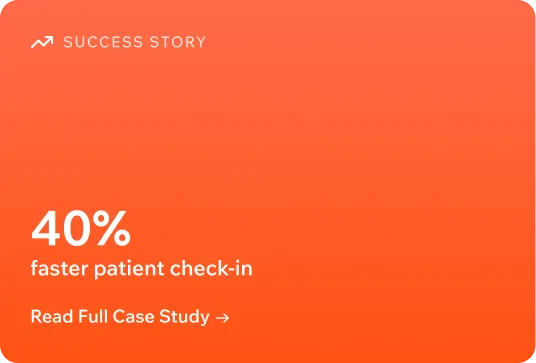



How we helped a healthcare startup increase patient onboarding by 180%

vervelo logo mobile
Generative AI - Model Development & Evaluation

Build, Validate, and Deploy Reliable AI Models

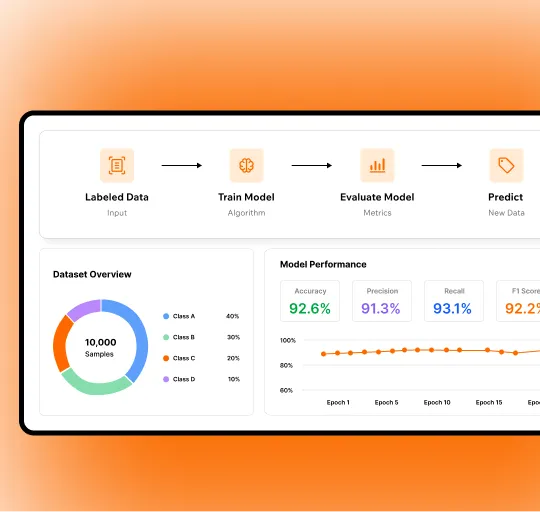
We design model systems end-to-end with measurable quality gates. From objective definition and training experiments to evaluation harnesses and production operations, we make model delivery repeatable and auditable.

30%

Faster Release Cycles

40%

Lower Incident Risk

99%

Run Traceability

24x7

Monitoring Coverage

Model development and evaluation dashboard

Capability 01

Problem Definition and Baselines

Model success begins with precise problem framing. We define objective functions, establish baseline performance, and align evaluation metrics to operational outcomes before development starts.

Core Activities

  • Translate business goals into measurable model objectives
  • Define target labels, constraints, and failure boundaries
  • Establish baseline models and benchmark metrics
  • Set acceptance thresholds by risk and impact tier

Deliverables

  • Model objective brief
  • Baseline benchmark report
  • Release criteria scorecard

Expected Outcomes

  • Clear success definition
  • Fewer rework cycles
Problem Definition and Baselines

Execution Notes

This capability is delivered with milestone reviews, quantitative acceptance criteria, and structured handoff artifacts so your team can sustain model quality long-term.

Capability 02

Experiment Design and Training

We run structured experiments across model variants, features, and hyperparameters with reproducible tracking. Every run is evaluated for quality, latency, and cost tradeoffs.

Core Activities

  • Design experiment matrix for controlled comparisons
  • Train and tune candidate models with reproducible configs
  • Track experiment metadata and artifact lineage
  • Measure quality versus throughput and infrastructure cost

Deliverables

  • Experiment registry and run logs
  • Top candidate shortlist
  • Cost-quality tradeoff analysis

Expected Outcomes

  • Faster candidate selection
  • Predictable delivery decisions
Experiment Design and Training

Execution Notes

This capability is delivered with milestone reviews, quantitative acceptance criteria, and structured handoff artifacts so your team can sustain model quality long-term.

Capability 03

Evaluation Framework

We build robust evaluation harnesses that test models under realistic conditions, including edge-case behavior, safety scenarios, and regression checks before production approvals.

Core Activities

  • Create golden, edge-case, and adversarial test sets
  • Run offline and pre-production online evaluations
  • Perform error taxonomy and root-cause analysis
  • Enforce regression gates for every model update

Deliverables

  • Automated evaluation pipeline
  • Error and risk analysis report
  • CI-integrated regression suite

Expected Outcomes

  • Higher model reliability
  • Lower production incident risk
Evaluation Framework

Execution Notes

This capability is delivered with milestone reviews, quantitative acceptance criteria, and structured handoff artifacts so your team can sustain model quality long-term.

Capability 04

Deployment Readiness and Monitoring

We operationalize evaluation results into production controls: observability, drift detection, rollback policies, and retraining triggers that keep model performance stable over time.

Core Activities

  • Define launch gates and phased rollout strategy
  • Set monitoring for quality, latency, and spend
  • Configure anomaly and drift alert thresholds
  • Build retraining and rollback operating procedures

Deliverables

  • Production runbook
  • Monitoring dashboard
  • Retraining and rollback playbook

Expected Outcomes

  • Stable production operations
  • Continuous model quality control
Deployment Readiness and Monitoring

Execution Notes

This capability is delivered with milestone reviews, quantitative acceptance criteria, and structured handoff artifacts so your team can sustain model quality long-term.

Our Model Evaluation Workflow

This workflow ensures every model release is measured, explainable, and production-safe before rollout.

01

Define Success Metrics

Map offline and online metrics to real workflow outcomes and establish hard release thresholds before experimentation.

Output

Approved scorecard with KPI and guardrail definitions

02

Build Test Suites

Construct representative benchmark, adversarial, and edge-case test sets that reflect production reality.

Output

Versioned test corpus with coverage breakdown

03

Run Comparative Experiments

Evaluate model candidates, prompts, and retrieval configurations under controlled and reproducible conditions.

Output

Leaderboard and recommended production candidate

04

Ship with Observability

Deploy with monitoring, alerts, and regression gates so model quality remains stable after launch.

Output

Operational runbook with alert thresholds and rollback criteria

Built for Healthcare Compliance

We implement secure model lifecycle practices aligned to healthcare interoperability and data protection standards.

HIPAA GDPR HL7 SOC

Frequently Asked Questions

Want to strengthen your model delivery process?

Speak to our team now ->
What is the difference between validation and evaluation?

Validation checks model setup during development, while evaluation measures whether the model meets quality, safety, and business thresholds for deployment.

Can you evaluate both predictive ML and LLM systems?

Yes. We support classical ML models, RAG systems, and agentic LLM workflows with domain-specific evaluation criteria.

Do you support post-launch monitoring and retraining?

Yes. We provide model health monitoring, drift detection, and retraining cycles to sustain performance over time.

How do you reduce regression risk during model updates?

We enforce regression gates in CI/CD, compare updates against production baselines, and only promote candidates that pass quality and safety thresholds.