









Cleans, normalizes, and maps disparate data to common schemas and standards — inside your own environment.
Trustworthy Data, Automatically
Every analytics and AI initiative stalls on the same problem: data that's inconsistent, siloed, and hard to trust. The Data Standardization Agent fixes it at the source — cleansing, mapping, and validating continuously — so the data feeding your warehouse, dashboards, and agents is clean.

Consistent
Every source
One trusted schema across all inputs
Fewer errors
Downstream
Bad records caught before they spread
Any source
DB · file · API
Ingests from wherever your data lives
Private
By default
Data is processed in your environment
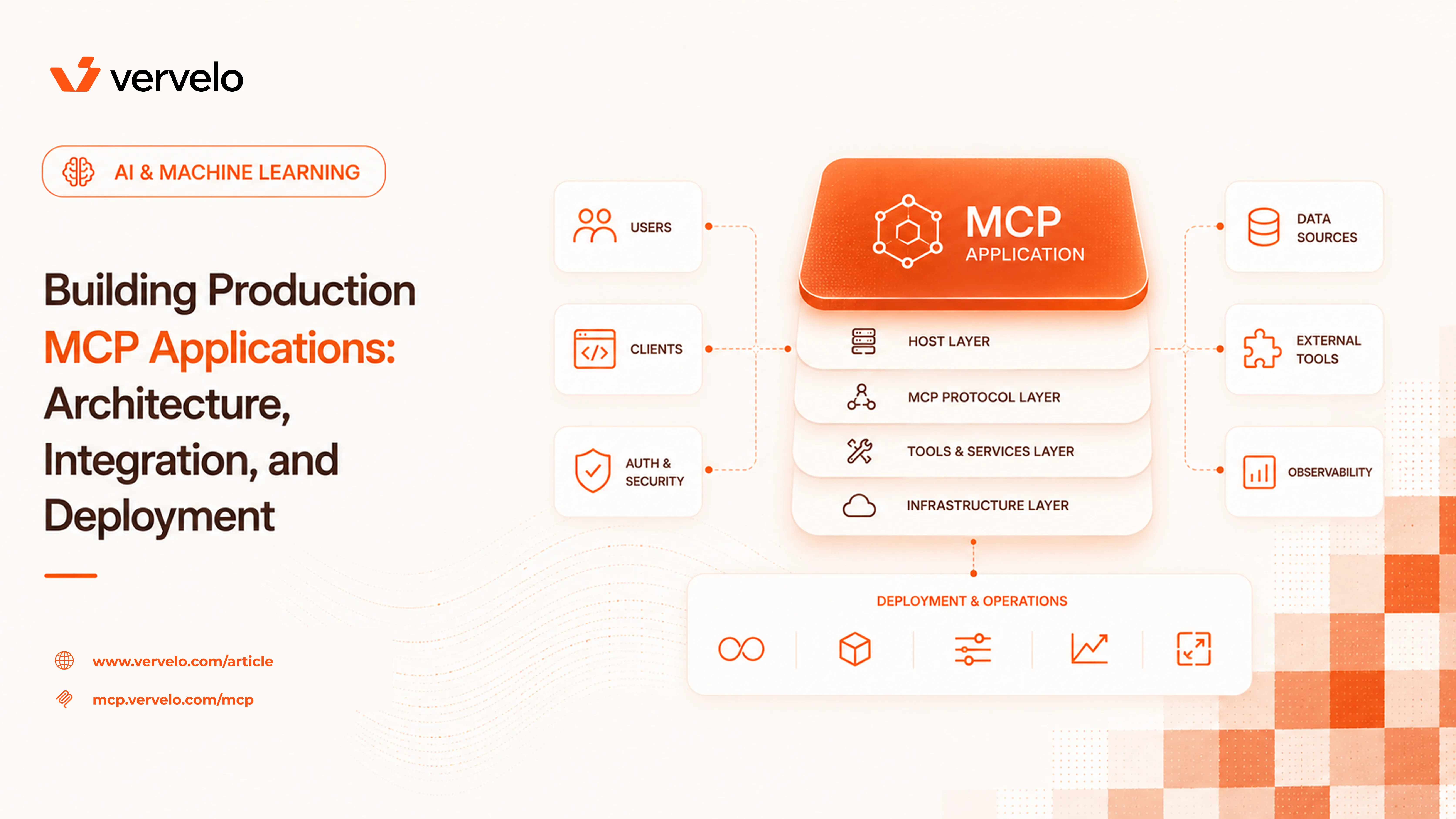
Data Standardization Architecture
The Platform, Specialized for Data Quality
The Data Standardization Agent runs on the same base Vervelo Agents Platform architecture as every other agent — here, a durable runtime powers batch pipelines, a streaming runtime handles live ingest and mapping, and the connected tools are the source, warehouse, and schema-registry systems standardization depends on.
Context Engineering
Engineered Context, Every Turn
Reliable agents aren't a single clever prompt — they're the product of context engineering: assembling exactly the right information into the model's context window on every turn. It's the discipline we build every Vervelo agent around. Here's what the Data Standardization Agent works from on each turn, and how we engineer it.
Data Standardization Agent context window
Assembled fresh on every turnSystem Instructions
The standardization persona and rules — the target schema and standards, quality thresholds, and never to silently drop or guess at data.
Tool Definitions
Ingest, transform, warehouse-write, and validation tools with strict schemas so mappings run safely and repeatably.
Memory & User State
Dataset context — source quirks, prior mappings, and standing rules the team has approved over time.
Conversation History
The job's steps and any analyst guidance so far, so mappings stay consistent across a run.
Retrieved Knowledge
Schema vectors — target schemas, standards (FHIR / HL7 / industry), and prior mapping decisions — retrieved to map correctly.
Environment Results
Profiling stats, transform results, and validation errors — surfaced so bad records are caught, not published.
Capabilities
From Messy to Trusted
Cleansing & De-duplication
Fixes formatting, fills gaps, and removes duplicates so records are consistent and reliable.
Schema Mapping
Maps disparate source fields to your common target schema, learning from prior mappings.
Standards Alignment
Normalizes data to industry standards like FHIR, HL7, and your own canonical models.
Validation & QA
Runs quality checks on every batch and quarantines records that fail your rules.
Continuous Pipelines
Runs as scheduled batches or streaming ingest so standardized data stays current.
Human Review
Surfaces low-confidence mappings and exceptions for a data steward to approve.
How it works
From Raw Source to Clean Table
01
Ingest
Pulls data from databases, files, and APIs — batch or streaming.
02
Profile
Analyzes structure and quality to understand each source's quirks.
03
Map
Cleanses and maps fields to your target schema and standards.
04
Validate
Runs quality checks and quarantines anything that fails the rules.
05
Publish
Writes clean, standardized data to your warehouse or lake, with a quality report.
Powered by the Vervelo Agents Platform
Open Source. On Your Infrastructure.
The Data Standardization Agent is built on our open-source platform — deployable in your cloud, on-prem, or air-gapped — so your data never leaves your environment to be cleaned or mapped.
Secure, Standards-Aligned Data Handling
The agent is built with audit logging, access controls, and safe data handling aligned to standards like SOC 2, GDPR, and HL7 FHIR for healthcare data — and because you self-host, sensitive data stays inside your environment.



Vervelo is a digital-health software partner blending deep clinical insight with world-class engineering to build tailored, secure, interoperable healthcare platforms.
Benefits of custom software solutions
-

You fully own IT consulting and software delivered
-

You get a highly personalized solution
-

Customize and integrate seamlessly
-

On-demand scalability is always possible

Frequently Asked Questions
Have a question that needs a human to answer? No problem.
Speak to our sales team now → What does the Data Standardization Agent do?
It cleans, normalizes, and maps disparate data to common schemas and standards, running securely inside your own environment, so downstream analytics and systems can trust the data.
What problem is it solving?
Every analytics and AI initiative tends to stall on the same issue — data that's inconsistent, siloed, and hard to trust. The agent fixes that at the source by cleansing, mapping, and validating data continuously.
What kinds of data sources can it ingest?
It can ingest from databases, files, and APIs — wherever your data currently lives — in either batch or streaming mode.
What are its core capabilities?
- 1. Cleansing & De-duplication: Standardizes inputs and removes duplicate records across disparate data sources.
- 2. Schema Mapping: Maps source fields to your target schema and learns from prior mappings.
- 3. Standards Alignment: Aligns data to industry standards (e.g., FHIR, HL7) or your own canonical models.
- 4. Validation & QA: Performs data validation with automated quarantining of failed records.
- 5. Continuous Pipelines: Supports both scheduled batch processing and real-time streaming pipelines.
- 6. Human Review: Flags low-confidence mappings for data steward approval and human-in-the-loop governance.
What's the step-by-step process the agent follows?
- 1. Ingest: Pull data from DBs, files, APIs.
- 2. Profile: Analyze structure/quality of each source.
- 3. Map: Cleanse and map fields to the target schema/standards.
- 4. Validate: Run quality checks and quarantine failures.
- 5. Publish: Write clean, standardized data to your warehouse/lake along with a quality report.
What architecture does the agent run on?
It runs on the same base Vervelo Agents Platform architecture as other agents — a durable runtime for batch pipelines and a streaming runtime for live ingest and mapping — connecting to source systems, a warehouse/lake, and a schema registry.