








Game Product & Services Case Study
A walkthrough of the full game production pipeline - from concept art through 3D asset creation, cross-platform development, and post-launch monetization strategy.
![Game Product & Services <span class='text-[#FF4400]'>Case Study</span>](/_astro/game-development-bg.D-BG9meG_ZqlxPe.webp)
Challenges & How These Services Help
This offering covers full-cycle game development for studios and publishers who need one team across the whole pipeline instead of juggling separate vendors for art, engineering, and monetization. Built primarily in Unity, Unreal / C#, C++, projects ship across PC, console, mobile, and WebGL, with the same core team carrying a title from first concept sketch through live-ops after launch.
Every engagement is scoped around five connected pillars - concept art, 3D art and asset creation, full-cycle development, QA and live support, and monetization strategy - so a client can start with one pillar (e.g. art outsourcing) or hand off the entire production.
Fragmented production pipeline
Art, engineering, and monetization handled by separate disconnected vendors slows iteration and muddies ownership.
Inconsistent art direction
Outsourced art that doesn't match the game's tone or scales poorly across platforms.
Slow or fragile 3D pipelines
Unoptimized models and materials that hurt performance on lower-end devices.
Post-launch instability
Bugs and player-reported issues pile up with no dedicated response.
Revenue left on the table
Monetization bolted on late without adapting to player behavior.
Product Context
Core problem
Coordinating concept art, 3D art, development, and monetization strategy under one roof, across whichever platform the game targets.
Primary users
Indie studios, publishers, and internal teams that need to extend capacity across art, engineering, or monetization for a specific title or platform.
Platform
PC, console, mobile, and WebGL builds from a shared Unity or Unreal / C# or C++ codebase, with support for VR/AR/MR titles where the project calls for it.
Service Pillars
Five connected pillars, engaged individually or as a full end-to-end production team.
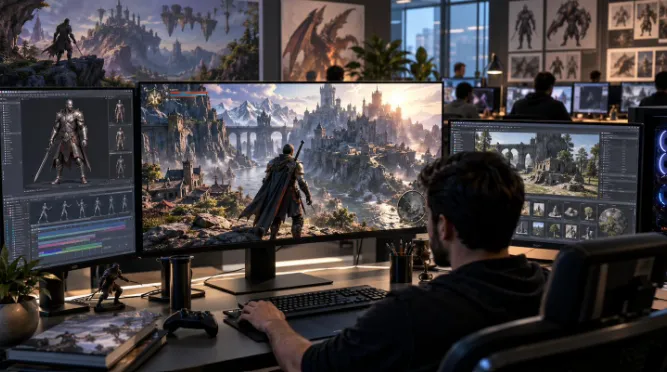
Concept Art & Art Direction
Early visual exploration - characters, environments, and key art - that locks down tone and style before full production begins, keeping every downstream asset consistent with the game's identity.
- Character, environment, and prop concept sketches
- Style guides and mood boards for art consistency across teams
- Key art for store pages, marketing, and pitch decks
3D Art & Asset Creation
Game-ready 3D models, textures, rigs, and animations built to the performance budget of the target platform - from stylized mobile assets to high-fidelity console and PC work.
- Character and environment modeling, texturing, and rigging
- Animation - gameplay, cinematic, and UI motion
- Platform-aware optimization (poly count, texture budgets, LODs)
Full-Cycle Development
End-to-end Unity or Unreal / C# or C++ development - systems, gameplay, UI, and platform integration - carried by the same team from prototype through certification and launch on the target store or platform.
- Gameplay systems, UI, and platform/store integration
- Multiplayer, networking and backend/server integration
- Cross-platform builds from a shared Unity or Unreal / C# or C++ codebase
- Performance profiling and certification support
QA & Live Support
Structured testing before launch and ongoing support after it - so issues are caught before players hit them, and the ones that slip through get a fast, accountable response.
- Functional, regression, and platform-certification testing
- Crash and player-report triage post-launch
- Patch and content-update support
Monetization Strategy & LiveOps
Monetization designed with the game, not after it - pricing, IAP structure, and live events tuned to genre and player behavior, with ongoing LiveOps to keep engagement and revenue healthy post-launch.
- IAP, ad, and subscription model selection by genre and platform
- Event and offer cadence to support ongoing engagement
- Post-launch metrics review and monetization tuning
Featured Work
A sample of shipped titles across mobile and browser platforms
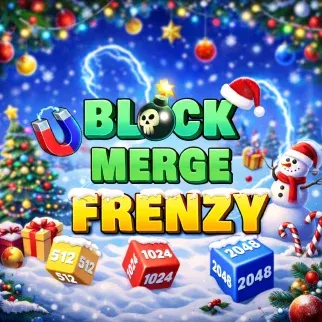
Block Merge Frenzy (iOS)
A fast-paced 2048-style block-merging puzzle game with magnet, double-value, and bomb power-ups.
View Game
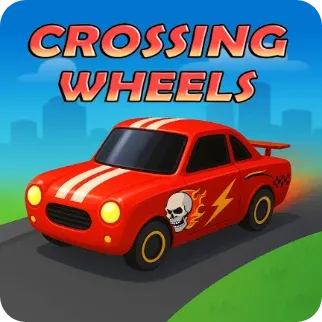
Crossing Wheels (iOS)
A reflex-based arcade game where players time their moves to cross busy roads and unlock vehicles.
View Game
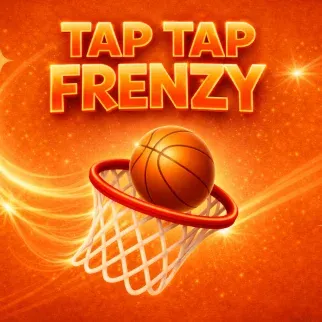
Tap Tap Frenzy (Android)
A skill-based physics tapping game with 100 levels, unlockable skins, and global leaderboards.
View Game
Skypod Scramble (WebGL)
A browser-based Unity title built for a client, playable instantly with no install.
View Game
Summary
These five pillars work best as one pipeline: concept art sets the direction, 3D art builds to it, development brings it to life across whichever platforms the title targets, QA keeps it stable, and monetization strategy makes sure the work pays off after launch. Engagements can start narrow - art only, or a single platform port - and expand into full-cycle production as the partnership grows.
![<span class='text-[#FF5214]'>Summary</span>](/_astro/handshake.C1r0Q7Fg_Z275FzV.webp)

Vervelo is a digital-health software partner blending deep clinical insight with world-class engineering to build tailored, secure, interoperable healthcare platforms.
Benefits of custom software solutions
-

You fully own IT consulting and software delivered
-

You get a highly personalized solution
-

Customize and integrate seamlessly
-

On-demand scalability is always possible

Frequently Asked
Questions
Have a question that needs a human to answer? No problem.
Speak to our sales team now → How much does game development cost?
The cost depends on the scope, platform, features, art requirements, multiplayer functionality, and overall complexity. Once we understand your requirements, we can provide a detailed estimate based on the project scope.
How long does it take to develop a game?
Development time varies depending on the size and complexity of the project. A simple prototype may take a few weeks, while a complete production-ready game can take several months. We provide a development timeline after reviewing the requirements.
Do you develop AR, VR, and MR applications?
Yes. We develop immersive AR, VR, and Mixed Reality applications for gaming, training, education, healthcare, pharmaceutical, industrial, and other business use cases.
Can you work with an existing Unity or Unreal Engine project?
Yes. We can work with existing Unity and Unreal Engine projects for feature development, bug fixing, optimization, upgrades, SDK integration, porting, and ongoing development.
Do you develop multiplayer games?
Yes. We develop both single-player and multiplayer games, including online gameplay, matchmaking, leaderboards, player progression, and other multiplayer features depending on the project's requirements.
Can you develop a complete game from scratch?
Yes. We provide end-to-end game development, from initial concept and prototyping to development, testing, optimization, integration, and final release.